Rethinking ESG: Lessons from the Global Sustainability Summit Panels
By Amb. Canon Otto – Convener, Global Sustainability Summit | Founder, Cleancyclers
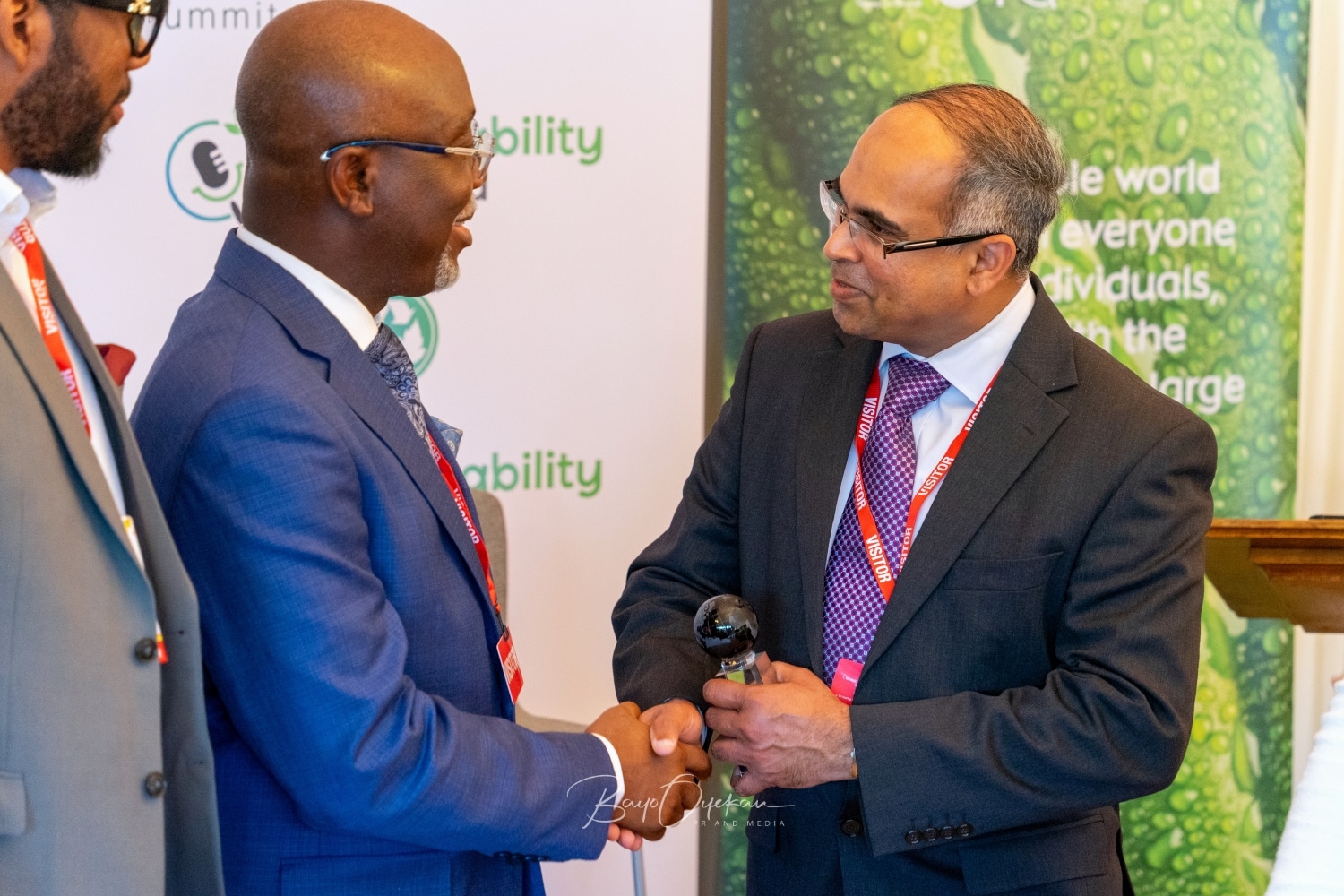
At the Global Sustainability Summit 2025, one conversation stood out with both urgency and clarity — the evolution of ESG.
Environmental, Social, and Governance (ESG) frameworks were once seen as compliance tools, boxes to tick, or reports to publish. But as the discussions across our panels revealed, ESG is undergoing a profound transformation.
Today, ESG is no longer about appearance.
It is about accountability, impact, and measurable change.
As Canon Otto, I have long believed that sustainability cannot thrive on declarations alone. It must be embedded into the DNA of how institutions operate, invest, and lead.
From Reporting to Responsibility
One of the most important lessons from the Summit panels was this:
ESG must move beyond reporting into real-world responsibility.
For too long, organizations have focused on:
- Publishing sustainability reports
- Meeting minimum compliance standards
- Communicating commitments without clear outcomes
But the world has changed. Stakeholders are asking deeper questions:
- What impact are you truly creating?
- Are your operations aligned with your sustainability claims?
- Who benefits — and who is left behind?
Through conversations amplified on SustainabilityUnscripted, we are seeing a shift from narratives to evidence-based sustainability.
The “E” Is No Longer Enough
Historically, ESG conversations have been dominated by the “E” — environmental factors such as emissions, energy use, and resource efficiency.
While critical, the Global Sustainability Summit panels made it clear:
Sustainability without social equity and strong governance is incomplete.
The “S” and “G” are rising in importance:
- Social (S): Inclusion, equity, labor conditions, community impact
- Governance (G): Transparency, ethical leadership, accountability structures
At Cleancyclers, we see this daily. Circular economy solutions are not just about reducing waste — they are about:
- Creating jobs
- Empowering communities
- Building systems that are fair and inclusive
This is ESG in practice — not theory.
From Compliance to Competitive Advantage
Another key takeaway from the Summit is the strategic value of ESG.
Forward-thinking organizations no longer see ESG as a cost — they see it as a driver of innovation, resilience, and long-term profitability.
Companies that lead in ESG:
- Attract responsible investment
- Build stronger stakeholder trust
- Mitigate climate and operational risks
- Position themselves for future regulatory environments
This is why at the Global Sustainability Summit, we emphasize “profit with purpose” — a philosophy that aligns financial performance with environmental and social impact.
The Role of Leadership: Canon Otto’s Perspective
As Canon Otto, I emphasize one truth above all:
ESG is a leadership issue.
Frameworks do not implement themselves.
Policies do not enforce themselves.
Reports do not create impact on their own.
It takes leaders — courageous, accountable, and forward-thinking — to:
- Integrate ESG into decision-making
- Align business models with sustainability goals
- Ensure that commitments translate into action
This is the kind of leadership we are cultivating at the Global Sustainability Summit, through Cleancyclers, and across the storytelling platform of SustainabilityUnscripted.
The Danger of “Greenwashing” — And the Path Forward
The Summit panels also addressed a growing concern: greenwashing.
As ESG becomes more mainstream, there is a risk that organizations will prioritize image over impact. This undermines trust and slows progress.
The path forward is clear:
- Transparency over perfection
- Measurement over messaging
- Action over ambition
Through SustainabilityUnscripted, we continue to challenge narratives that lack substance, while amplifying those backed by real impact.
The Future of ESG: Integrated, Inclusive, Impact-Driven
The evolution of ESG is not a trend — it is a transition.
The future of ESG will be:
- Integrated into every business function
- Inclusive of all stakeholders
- Impact-driven, with measurable outcomes
At the Global Sustainability Summit, we are not just discussing ESG — we are redefining it.
A Call to Action
To organizations, policymakers, and leaders around the world:
Do not treat ESG as a requirement.
Treat it as a responsibility.
Do not measure success by what you report.
Measure it by what you change.
Through Cleancyclers, SustainabilityUnscripted, and the Global Sustainability Summit, we remain committed to advancing an ESG future that is credible, inclusive, and transformative.
Because in the end, sustainability is not about frameworks.
It is about legacy.